
The Three Out – Australia’s International Jazz Trio
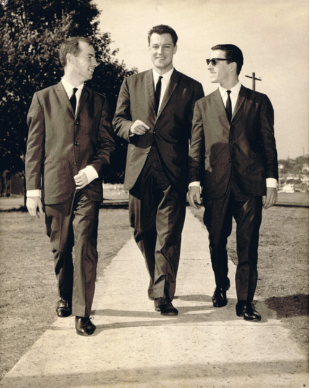
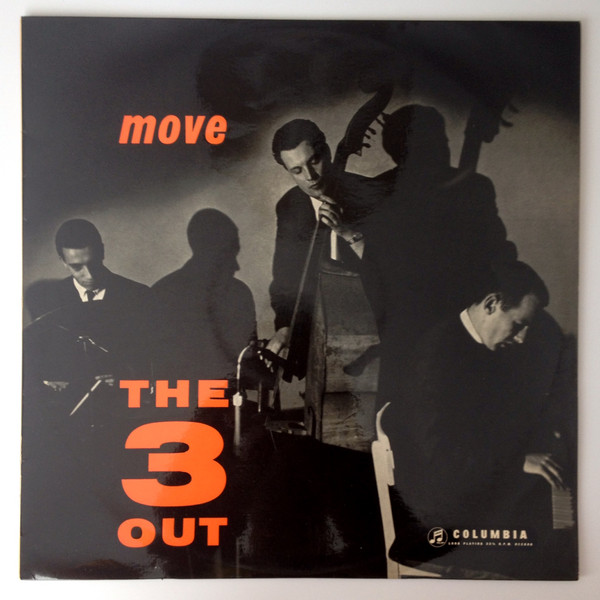
The Three Out were Australia’s most popular modern jazz group in 1960. Made up of Freddy Logan (sb), Mike Nock (p), Chris Karan (d), they recorded two albums: Move and Sittin’ In.
Freddy Logan
Image from Philharmonic July/Aug 1952
Frederik Christiaan Loggen was born 8 April 1930 in Amsterdam, Netherlands. He would later anglicise his name to Fred Logan, though was variously known as Freddy or Freddie through most of his career in jazz. He began playing bass in 1945 and performed in several jazz bands around Amsterdam including the Pia Beck Trio which he joined in 1949. Logan made his first studio recordings with the trio on ‘Pia’s Boogie’ (1950) before leaving to form his own group. At this time, Logan met Australian actress and model Lucille Power who joined his quintet as vocalist for a tour in Germany. The two married in 1953 and moved to England where Logan recorded with Kenny Graham’s Afro-Cubists, the Derek Smith trio, and others. With the birth of their son John Loggen, the young couple sailed to Australia to visit Power’s family. They arrived in 1956 for what was meant to be a short visit, though Logan became involved in Sydney’s jazz scene and stayed for several years.
Chris Karan
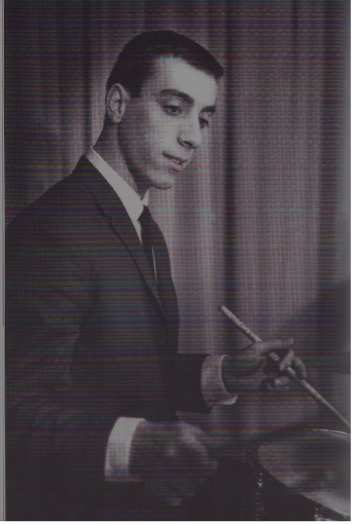
Chrisostomos Karanikis was born 14 October 1939 in Carlton, Victoria, Australia. Like Logan, he would anglicise his name, and is best known as Chris Karan. He began playing drums at school when he was around 12 years old and left his studies behind at 16 to pursue a career as a professional musician. His first job was playing with accordionist Sergio Fochi at The Oriental Hotel on Collins Street six nights a week. However, Karan found time to sit in at other spots such as The South Pacific, and Jazz Centre 44. He moved to The Tarantella to play with Wolf Abramowitz’s Orchestra along with Fochi, before Karan was invited to join the house band at The Embers restaurant. The Embers opened in August 1959 and soon after the band recorded an album Jazz At The Embers, released the following year. It featured Karan alongside Australian Frank Smith (as), and American’s Frank Thornton (bl, ts), Wilmus Reeves (p), Carl Brown (d), and Barbara Virgil (v)
Mike Nock
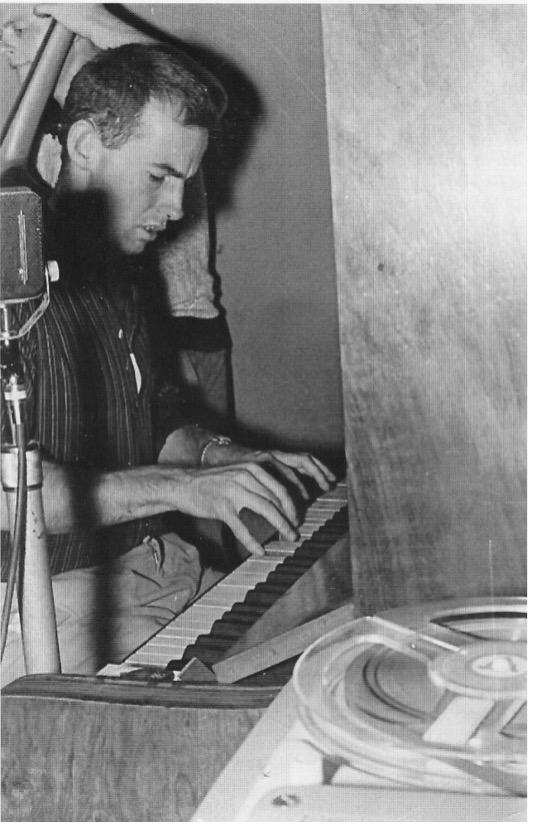
Michael Anthony Nock was born 27 September 1940 in Christchurch, New Zealand. Nock began piano lessons at 11 years old and left home at 16 to play jazz. He joined The Fabulous Flamingos in Wellington, before moving to Auckland where he recorded with Johnny Cooper, Johnny Devlin, and the Bob Paris Combo. Nock was a popular pianist in the Auckland scene, but had his eyes set on America. He decided the best route was to take a short detour via Australia, and snuck onboard a boat to Sydney, arriving in 1958 at 18 years old. Nock performed at El Rocco in a short-lived group with Colin Jones (t), Gerry Gardiner (sb), Bob Bertles (as) and Stewart Speer (d), before moving to Melbourne to join The Embers Quintet alongside Chris Karan. Then a fire at The Embers soon after in November 1959 meant the band had little else to do except practise over the summer months. However, before The Embers reopened, Nock had a disagreement about the bands direction and left for Sydney. Chris Karan would follow soon after.
A Trio Are Formed
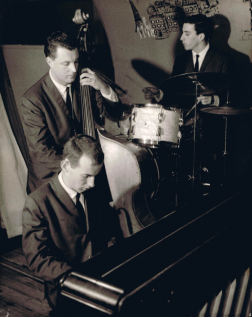
In Sydney, Chris Karan and Mike Nock set about finding work. Nock returned to the El Rocco, and put together a band to record with American sisters The Powell Twins as The Mike Nock Orchestra. The group included Colin Bailey (d) Cyril Bevan (d), Neville Chamberlain (g), Ray Swinburne (as, ts), and Ron Martin (sb). Freddy Logan heard Nock and suggested they put together a trio, with Nock recommending Chris Karan as their drummer. Unfortunately, Karan was contracted with the Rex Hotel on Macleay Street, Kings Cross where he was performing with accordionist Ronnie Fabri. So, Colin Jones sat in temporarily with Nock and Logan until August 1960. At that time, Karan was free again, and The Three Out made their debut at the El Rocco to immediate success.
“There were people going crazy for the group and it was a terrific group to play in. Mike’s music and the way he played was really quite rewarding for me because it got me going and put me on the right track for the way I should be playing. It was just so inspiring and rewarding…” – Chris Karan 2022
“Something happened there. We’d be sweating heaps and there’d be all these people going apeshit over it. The club was like a church then. It was like a black gospel church. Everything was new. We felt like an élite.” – Mike Nock in Bodgie Dada & the Cult of Cool: Australian Jazz since 1945, John Clare.
The Three Out performed to their enthusiastic audience Tuesday to Friday nights, while Freddy Logan still performed with The Australian All Stars each Sunday as well. The All Stars had released their debut album Jazz For Beach-niks Volume 1 in July 1960 where it became Australia’s best-selling jazz record in over a decade. Local jazz fans were starved for Australian jazz in the still relatively new LP format. Logan had made several recordings with Columbia Records since he’d arrived in Australia. These included sessions with Graeme Bell & His Skiffle Gang, Johnny Ashcroft, The Don Burrows Six, American singer Russ Arno, and Logan’s own Loganberries project. It was through these connections that he was able to secure a recording session for his new trio.
| Tune: Sky Lounge Blues The Australian All Stars ID: 23167-006 |
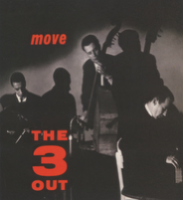
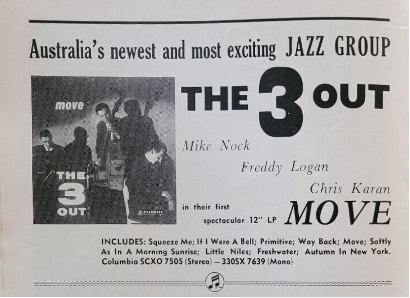
On 28 September 1960, The Three Out entered EMI’s Sydney studios to record their first album Move. Initially it was to release that November, however the group weren’t happy with all the songs recorded and a second session was held on 14 October to finish the album. Across the two sessions, they recorded originals and standards, similar to how their live performances were at the time. These included Logan’s ‘Freshwater’ alongside Vernon Duke’s ‘Autumn in New York’ which Logan had coincidently recorded previously with Tommy Whittle while in England. The finished album included a total of nine songs, though fans would need to wait until March 1961 for Move to be released.
Three Out On The Road
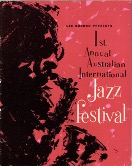
While The Three Out were one of the most popular modern jazz bands in Sydney, if not Australia, jazz fans outside of Sydney only knew of the trio by their reputation in Music Maker or jazz newsletters. That would all change in October, when The Three Out joined a national jazz tour organised by promoter Lee Gordon.
After significant success with tours featuring a mix of Australian and American rock and roll groups, Gordon decided to do something similar with jazz. The First Australian International Jazz Festival was held 26-29 October 1960 in Adelaide, Brisbane, Melbourne and Sydney. It featured international stars including Coleman Hawkins, Gene McDaniels, Dakota Staton and The Teddy Wilson Trio. Alongside their own set, The Three Out backed McDaniels, while Logan and Karan supported Dakota Staton and the Coleman Hawkins Quartet. Karan also sat in with Teddy Wilson for part of the tour.
| Tune: Little Niles The Three Out ID: 13309-028 |
Following the national tour, The Three Out played at the newly opened Hungry I. However, they were criticised by owner Lee Sharon for not playing the type of music people could dance too. By February 1961, The Three Out returned to the El Rocco where they could play the jazz they liked, and that they knew would be appreciated.
Around this time, The Three Out made several television appearances on Six O’Clock Rock, Revue 61, and Some Jazz In Australia. Recordings from Lee Gordon’s jazz tour were also broadcast on radio, and soon after fans could finally buy their album in store, as Move was released in March 1961 in stereo and mono formats.
| Tune: Move The Three Out ID: 33179-105 |
With their album out, The Three Out took a short interstate tour to Melbourne and Canberra before they hopped across to New Zealand with singer Paula Langlands. Once they were back in Sydney, The Three Out returned to the studio to record their second album Sittin’ In. This time they would be joined by several of their friends, with one side of the album featuring the trio, and the other side additionally featuring Errol Buddle, Don Burrows, Ron Falson and Colin Jones. Sessions were held on 2, 3 and 10 May 1961.
| Tune: Loganberries Sittin’ In With The Three Out ID: 33178-008 |
The album was mostly originals, featuring the first recorded compositions by Mike Nock, as well as others by Don Burrows, Ron Falson, and Freddy Logan.
“When we were in the studio, we hadn’t seen any of the songs. Well, I hadn’t. So, we ran them through before we recorded them, and all of them were one-takes apart from ‘Loganberries’ which had a second take. But all the other takes were what came out on the LP.” – Colin Jones 2024.
While he’d enjoyed great success so far since arriving in Australia in 1959, Nock hadn’t forgotten his plan to go to the USA. Earlier, he’d applied for a scholarship at the Berklee School of Music in Boston. When it was announced that Nock had been successful, Freddy Logan planned a short international tour for the trio before they would say goodbye.
End of The Three Out
The Three Out took a one-way trip to the UK performing on RHMS Patris. When they arrived in London they made their debut performing at Ronnie Scott’s Jazz Club, then took part in a short tour of England and Europe, including a visit to Amsterdam. Unfortunately, neither of The Three Out albums had been released outside of Australia so no one knew who they were, and there were fewer doors open to them than expected. Then, Nock left to begin his studies in Boston, leaving Karan and Logan to themselves.
Freddy Logan still knew many people within the local jazz scene thanks to his time spent in London during the 1950s. Through these connections, he joined Tubby Hayes’ band and helped Chris Karan find work as a member of actor-musician Dudley Moore’s trio. Logan also helped other visiting Australian musicians find work, including Ted Nettelbeck, Rick Laird and Bruce Cale. He also regularly appeared on radio with his own groups, including a recording a rendition of ‘Freshwater’, which he had previously recorded with both The Australian All-Stars and The Three Out.
Meanwhile, Mike Nock toured with Yusaf Lateef and John Handy, before forming The Fourth Way and recording several albums of fusion jazz. He would return to Australia in the 1980s to teach at the Sydney Conservatorium and has remained in Sydney since.
Chris Karan became well known for his percussion work. He worked as a session musician in-between recording and touring with Dudley Moore and Roy Budd’s respective trios. Outside of world tours, he has remained in England, though has since retired from music professionally.
During the 1970s, Freddy Logan left England for the US, though found the jazz scene unwelcoming. After some work as bandleader onboard MS Nordic Prince, he returned to England where he remarried to Catherine Kelly, a former singer with The New Seekers. Logan spent several years leading bands in hotels until a car accident left him unable to play bass. Following a battle with cancer, Freddy Logan died 3 May 2003 aged 73.
The Three Out Redux
Both albums by The Three Out remained out of print for several decades, until Be! Jazz, a German label specialising in obscure reissues, released remastered editions of Move and Sittin In on vinyl and CD in 2015. The releases inspired Mike Nock to take his latest trio on a tour dubbed The Three Out Redux.
“Back in 1960, if anyone had suggested that in 2016, I’d be doing a gig in Sydney, playing music from my then new recording, MOVE, I would have thought they were seriously deranged. But here I am.” – Mike Nock 2016, Facebook
The tour included stops at Foundry616 in Sydney, Bird’s Basement in Melbourne, and QPAC Cremorne Theatre in Brisbane. In 2019 Nock revived the Redux celebration for one more show at Canberra’s Smith’s Alternative. The show was recorded and later broadcast on ArtSound FM’s Friday Night Live.
“It was nice how we were able to do a couple of recordings, because it’s the kind of thing that didn’t happen much in the early ‘60s. People weren’t doing a lot of recording of Australian jazz.” Chris Karan 2025.
Both of The Three Out albums stand out as fantastic examples of Australian modern jazz during an era when Australian jazz often wasn’t recorded or released by major record labels. Alongside albums by The Australian All Stars, The Embers Quintet, The Bryce Rohde Quartet, and The Pat Caplice Quartet, The Three Out recordings give contemporary listeners an idea as to what jazz sounded like in Australian circa the late 1950s into the beginning of the 1960s. While each of the trio found greater international success in their later careers, The Three Out will forever remain an important part of Australian jazz history.
ACKNOWLEDGEMENTS & SOURCES
The Three Out – Australia’s International Jazz Trio is proudly presented by the Australian Jazz Museum (AJM) in celebration of the release of James Gaunt’s book The Three Out’s Move. Researched, written and curated by James Gaunt with assistance from David Canterford. Audio files prepared by AJM staff and presentation by Robert Ayres.
All interviews conducted by James Gaunt excluding the following:
Clare, J. & Brennan, G., 1995. Bodgie Dada & the Cult of Cool: Australian Jazz since 1945. Sydney: University of New South Wales, pp. 68–9.
Nock, M., 2016a. Facebook [Online] Available at: https://www.facebook.com/photo?fbid=1035514223187036&set=a.123719783098998 [Accessed 29 March 2026].
List of abbreviations:
alto saxophone (as), brass bass – tuba, sousaphone (bb), banjo (bj), bandleader (bl), clarinet (cl), drums (d), guitar (g), piano (p), string bass (sb), trumpet (t), trombone (tb), tenor saxophone (ts), vocals (v)
Listen to the entire LP
| Play | Tune |
| Just Squeeze Me (But Please Don’t Tease Me) | |
| If I Were A Bell | |
| Primitive | |
| Way Back | |
| Move | |
| Softly, As In A Morning Sunrise | |
| Little Niles | |
| Freshwater | |
| Autumn In New York |